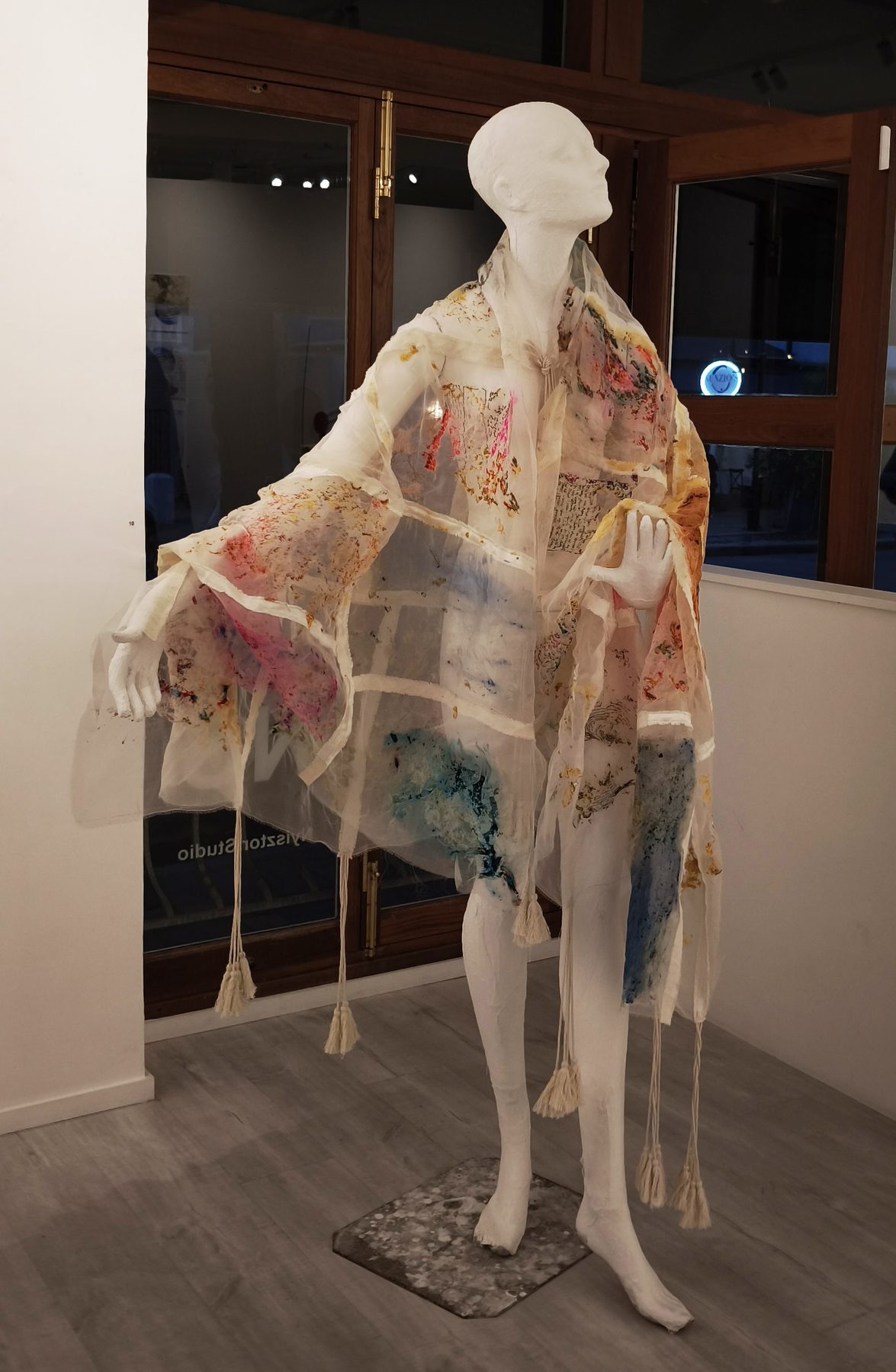
Burial Shroud, 2024
Silk organza, silk/hemp satin, silk noil plain weave, cotton tassels, ochre, pigments from dissolved letters
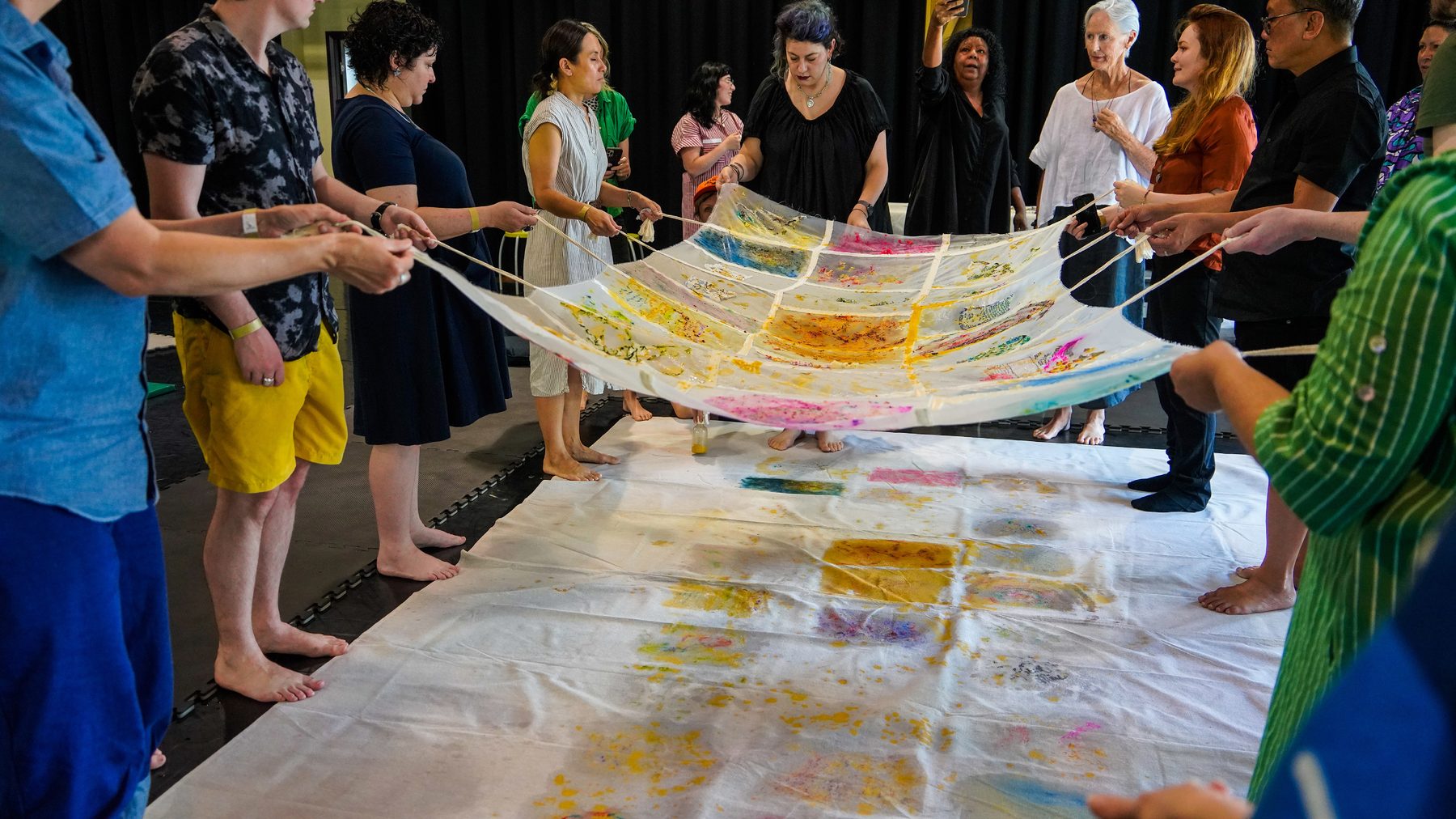
This burial shroud is a collaborative biodegradable garment designed and made during the 2024 Sydney Festival of Death ‘Interlacing: Cloak Making and Garments for the Grave’ workshop.
The garments people are dressed in after death are shaped by culture and belief systems and also deeply individual and personal. For most of human culture the materials we dress our people in biodegrade, yet with the introduction of synthetic and chemically treated textiles, we have introduced materials that do not break down after burial.
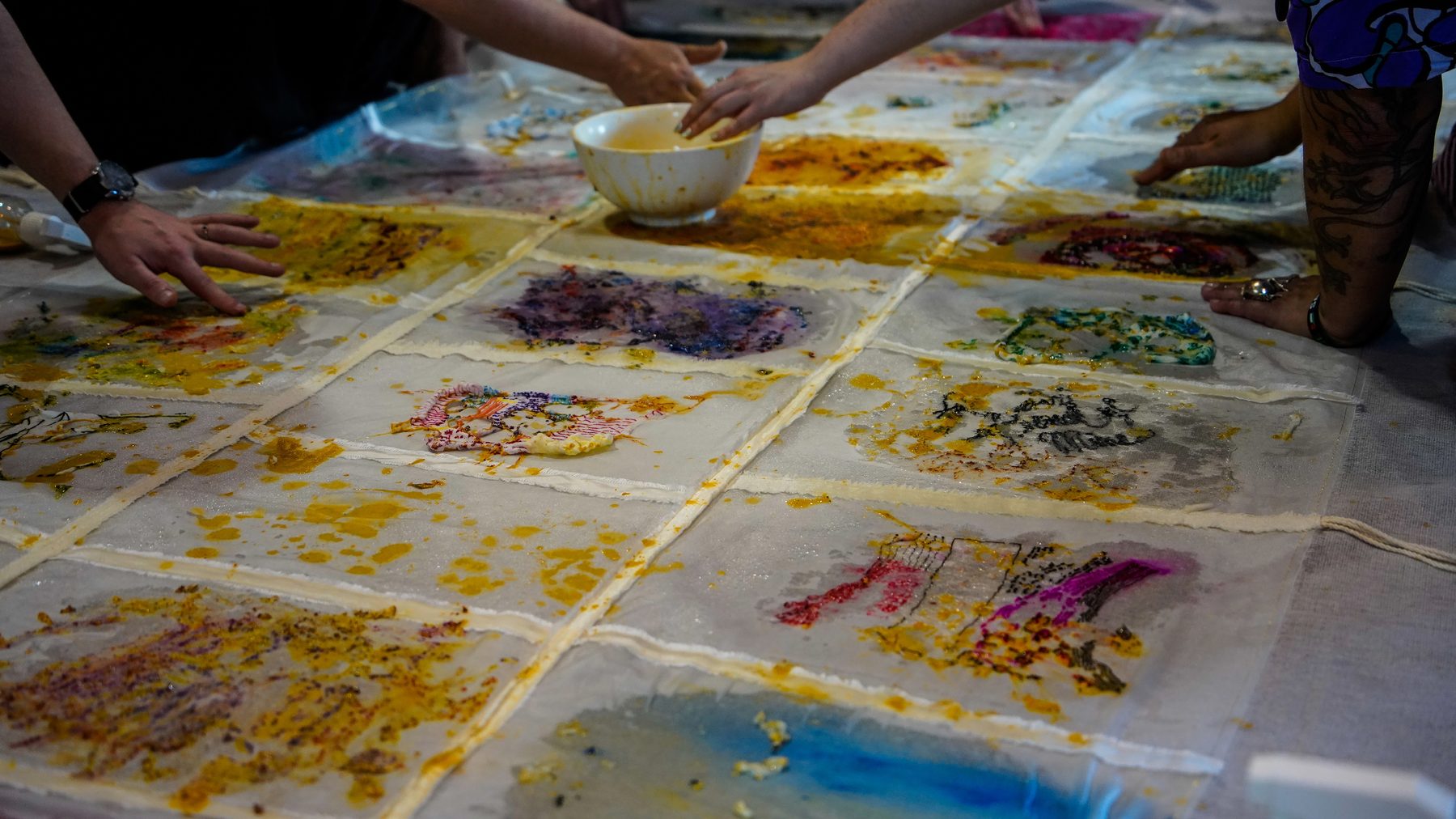
Drawing on the shared values of the artists and designer, the project captures a socially and environmentally conscious approach to dressing the deceased. Made of thirty silk panels, the shroud references the material palette used by designer Pia Interlandi, and artist Maree Clarke’s own possum-skin cloaks, made for her by Kerri Clarke along with her family and friends.
The silk shroud was presented to the festival participants who were invited to write or draw a letter to someone who has died on dissolvable paper. These letters were then placed onto a panel in the shroud ready for ‘sending’. Maree and Kerri dripped ochre mixed in water over the letters to start the dissolving process. Participants were then invited to rub their words into the silk cloth, sending them on to what comes next.
This collaboration is the seed for future works between the group to explore how traditional and emerging end of life practices can be entwined for positive futures.
Pia Interlandi
Pia Interlandi is a designer and Associate Professor of Creative Practice in the School of Design and the Built Environment at Curtin University. Her teaching, research and practice explore the materials and materiality of death, dying, disposal and dispersion. She combines tacit and explicit knowledge bases to traverse and interlace academic and professional practice, advocating for natural death and contemporary funeral practice. She is a regular contributor to public discourse on creativity at end-of-life, family-led funerals, natural burial and emerging disposal technologies. Her work has been featured in four documentaries and extensively covered by international print, broadcast and digital media across Australia, the UK, US, Japan, China, Germany, Spain and Brazil, with coverage appearing in multiple languages.
Maree Clarke
Maree Clarke (Wemba Wemba, Mutti Mutti, BoonWurrung, Yorta Yorta woman born in Swan Hill) is a pivotal figure in the reclamation of southeast Australian Aboriginal art practices, reviving elements of Aboriginal culture that were lost – or laying dormant – over the period of colonisation, as well as a leader in nurturing and promoting the diversity of contemporary southeast Aboriginal artists. Maree is known for her open and collaborative approach to cultural practice. She consistently works in intergenerational collaboration to revive dormant cultural knowledge – and uses technology to bring new audiences to contemporary southeast Aboriginal arts.
Kerri Clarke
Kerri Clarke (Boonwurrung, Wemba Wemba) works with communities across South eastern Australia, maintaining and establishing cultural connections for Aboriginal communities, families and children and young people. Kerri is an established Possum Skin Cloak maker having participated in and facilitated the creation and exhibition of many cloaks across the South east of Australia and internationally. Kerri has participated in the revival and making of cultural objects for over 20 years, passing this knowledge onto family members and the next generations.
Hini Hanara
Hini Hanara is Māori, Queer and non-binary. Their practice is informed by their ancestral demand for Tino Rangatiratanga, or self-sovereignty. Their creative practice was established in 2003 following the completion of a Bachelor in Fashion Technology. Using fashion, they have since woven graphic and costume design, event management and community facilitation into their skill set. Most recently Hini has established themselves as a trusted creative practitioner within the end of life and funeral sector where they promote community led death care.